
Reflection
The Eagle and her compass
A Reflection on Purpose, Grace, and Stewardship
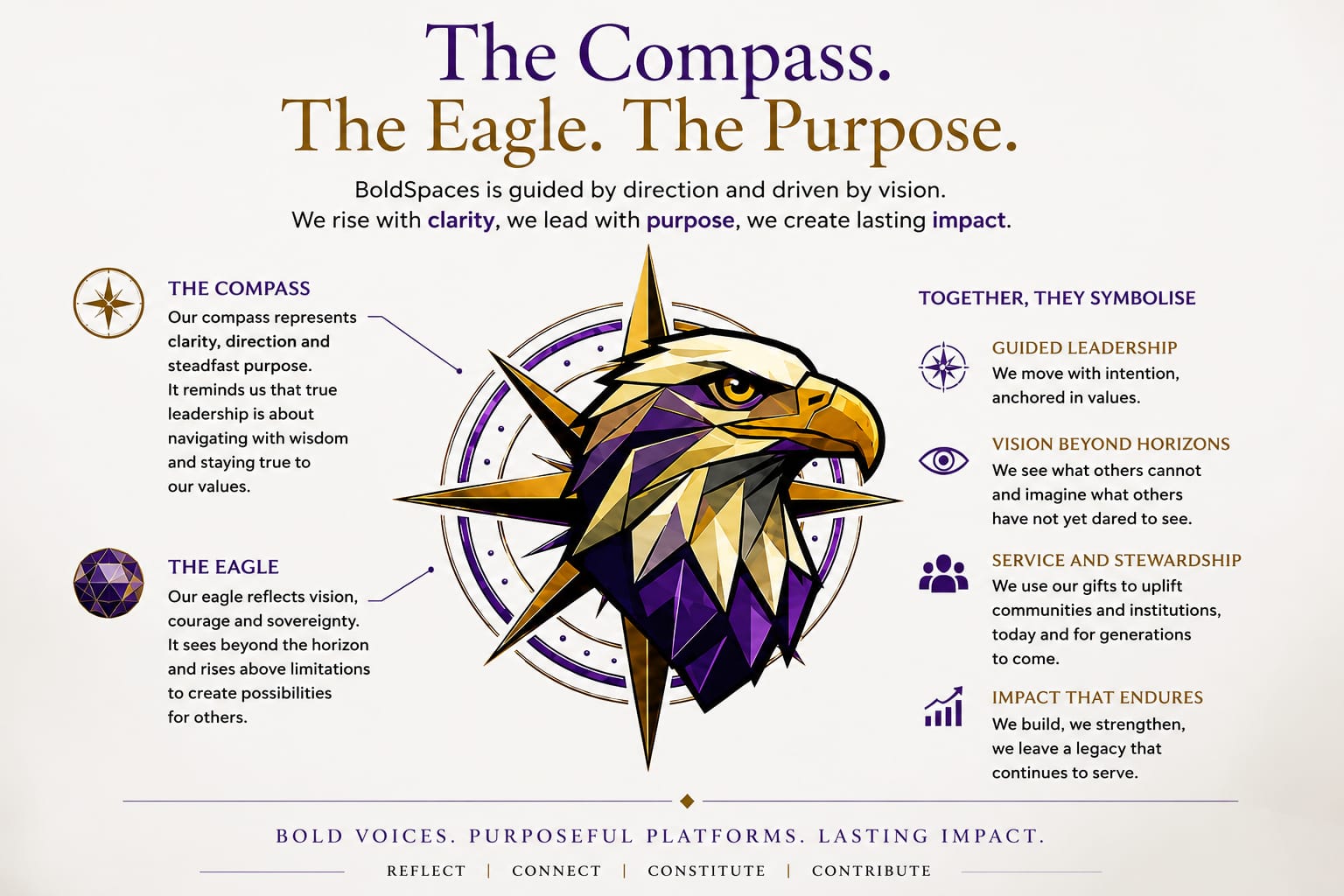
I have always admired the eagle. Perhaps because it represents qualities I have spent much of my life pursuing: vision, courage, perspective, and the willingness to rise above immediate circumstances in order to see what lies beyond the horizon.
The Eagle
I have always admired the eagle. Perhaps because it represents qualities I have spent much of my life pursuing: vision, courage, perspective, and the willingness to rise above immediate circumstances in order to see what lies beyond the horizon.
The eagle sees what others do not yet see. It notices possibilities hidden within challenges, recognises patterns where others see only complexity, and rises above noise and distraction to gain a clearer view of what lies ahead. There is something deeply appealing about that. Throughout my life, I have often found myself drawn toward questions that required looking beyond the immediate and imagining what might be possible with wide-eyed curiosity.
As a physician, I became interested not only in treating illness but in understanding the systems that produced it. As a public health practitioner, I became interested not only in programmes but in the institutions that sustained them. As a strategist, I became interested not only in solutions but in readiness, resilience, and the conditions that allow people and communities to thrive long before crises emerge.
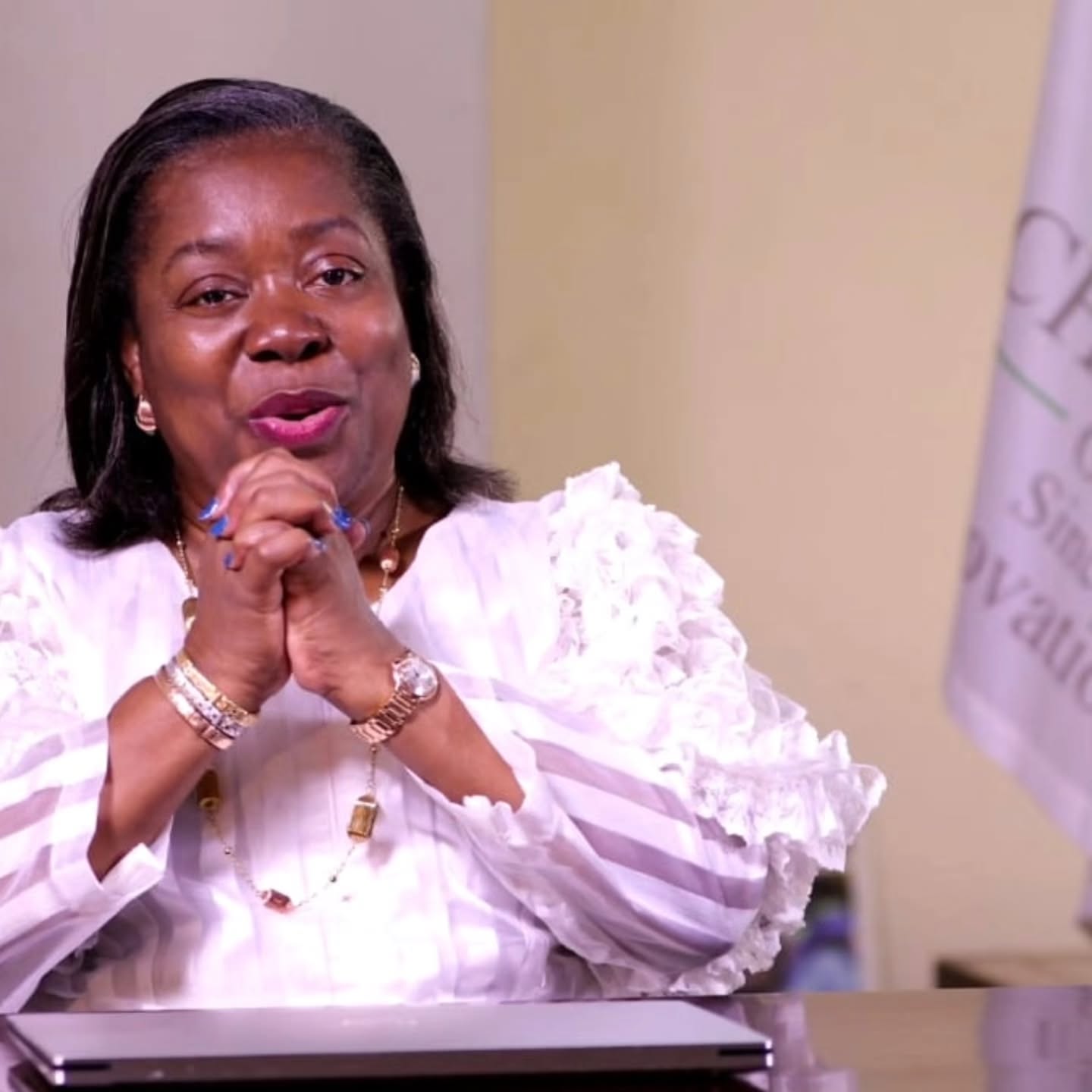
Again and again, I found myself asking larger questions. How do communities become self-reliant? How do institutions become resilient? How do citizens become active participants in shaping their futures? How does development become sovereign rather than dependent? The questions evolved over time, but the instinct remained the same: to look beyond the immediate, search the horizon, and imagine what might become possible.
People often describe this as vision. Perhaps they are right. Yet with time, I have come to believe that vision alone is not enough. A life can travel great distances and still arrive nowhere that matters. A person can achieve remarkable things and still lose sight of what gives those achievements meaning. An institution can grow larger while drifting away from its purpose. Seeing far is not enough. The journey needs a compass.
The Compass
The compass asks different questions. It is less interested in possibility than purpose. It asks not, How far can I go? but, Why am I going? Not, What can I achieve? but, What should I serve? Not, What is possible? but, What is worthwhile?
For much of my life, I did not think consciously about the compass. I was aware of the work, the opportunities, the responsibilities, the challenges, the decisions, and the occasional disappointments. Yet looking back, I can now see that something else was quietly present. Something was guiding the journey even when I was not fully aware of it.
I can only describe it as grace: not an abstract idea, but a lived reality expressed through faith, people, unexpected opportunities, necessary correction, and encouragement when the path felt uncertain. It also came through relationships that carried wisdom long before I was ready to understand it.
For many years, however, the eagle was the story. The courage to fly. The willingness to see beyond the horizon. The determination to keep moving despite uncertainty. The rugged bold tenacity to be authentic and own my voice. The audacious optimism to imagine what did not yet exist. Those things remain important. But they are not the whole story.
Grace as Guidance
Recently, I experienced a moment of discovery that surprised me. For a long time, I had looked at the BoldSpaces symbol that had become closely associated with my work and reflections. Like most people, I saw the eagle immediately: its strength, vision, determination, and ability to focus on distant horizons were impossible to miss. What I did not fully see was the compass, though it had been there all along.
The symbol had been telling the story before I found the words. What began as a visual identity slowly revealed itself as something more: not a statement about achievement or leadership, but a reflection on direction. The eagle sees. The compass guides.
And suddenly I found myself wondering whether that had also been true of my own life. For many years, I believed the journey had been shaped primarily by vision, effort, conviction, discipline, and perseverance. Looking back, I am no longer so sure. I now recognise another, quieter force: faith, values, mentors, relationships, experiences, lessons, and grace. These gave direction and deepened purpose.
“With great power comes great responsibility.”
On the passage from seeing to stewardship.
Uncle Ben, Spider-Man (2002)
The older I become, the more I realise how much of my journey depended upon things I did not create. I inherited values, examples, stories, faith, courage, and the conviction that service matters. I inherited the belief that people matter and the understanding that institutions matter because people matter.
At the time, I thought these were simply parts of life. Now I see them differently. They were compass points: quiet indicators, persistent reminders, and small influences that, over time, shaped far more of the journey than I realised. The eagle was visible. The compass was hidden. Yet it may have mattered most.
That may be one of the gifts of ageing. We begin to understand that what looked like independence was often accompaniment; what looked like certainty was often guidance; what looked like strength was often grace. The compass was always there. I simply did not know I was following it.
From Leadership to Stewardship
No one begins life with their own compass. We borrow, learn, or inherit direction from others, parents and grandparents, teachers and mentors, faith communities and friendships, books and experiences, failures and disappointments, and examples of integrity and courage. Over time, these influences shape us. They become part of who we are and, often without our realising it, become part of the guidance we offer to others.
This is where leadership begins to mature into stewardship. The focus gradually shifts from achievement to continuity, from success to significance, from building to preserving. We begin to ask different questions: What should endure? What must not be lost? What wisdom should be passed on? What lessons should continue to serve others? These are stewardship questions. They emerge not because ambition has disappeared, but because perspective has deepened. We begin to understand that our greatest contributions may not be the things we built, but the direction we helped preserve.
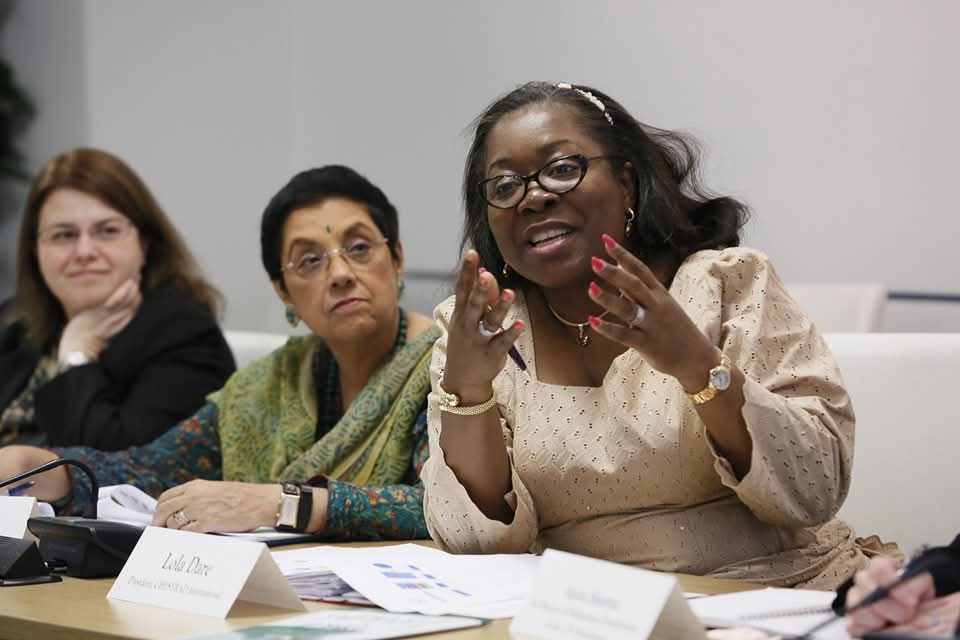
We begin life relying on the compass of others. Gradually, we learn to see further for ourselves. With experience comes perspective. With perspective comes responsibility. And if grace permits, we eventually become both. A compass for some. An eagle for others.
The measure of a life, then, may not be how far we travelled, how much we achieved, or how many footprints we left behind. It may be whether we preserved enough direction for others to continue the journey. For legacy is not about being remembered. It is about ensuring that what has been learned, built, received, and contributed is not lost. It is about preserving wisdom, relationships, lessons, institutions, and grace so they may continue to serve. It is about leaving behind more than footprints; it is about leaving behind direction. That may be the true purpose of a life well lived. In the end, the eagle may inspire us to see farther, but it is the compass that teaches us how to remain true.
And wisdom, I have come to believe, is found in holding both the vision of the eagle and the direction of the compass. The courage to lift our eyes toward the horizon, and the humility to remain guided by what matters most. For what ultimately endures is not the distance we travelled, but the direction we preserved for those who follow. To see with the eyes of an eagle, to remain guided by a compass, and to leave behind a direction others can trust: that may be grace, and that may be legacy. For what ultimately endures is not the distance we travelled, but the direction we preserved for those who follow. That, I have come to believe, is the truest measure of a life well lived.